Low-Waste Travel Checklist: Eco-Friendly Packing & Habits
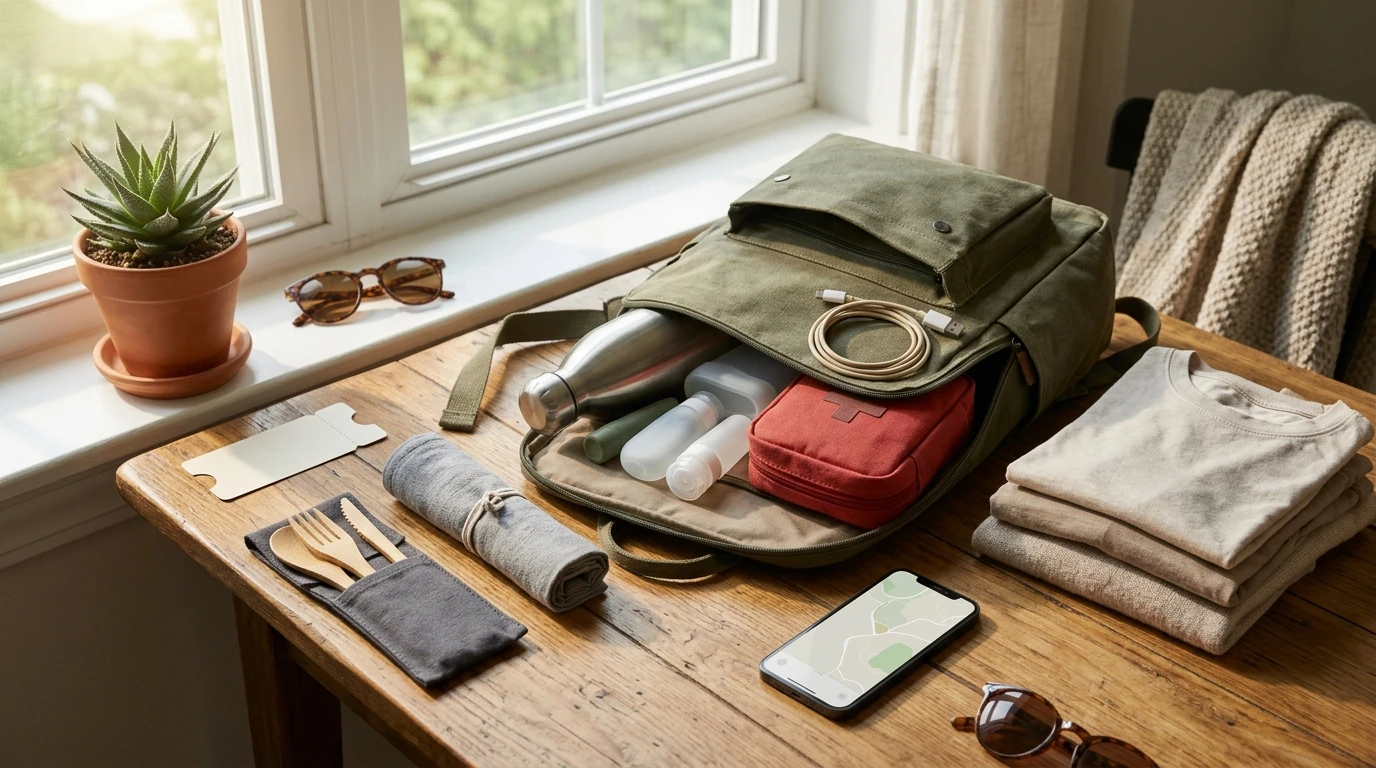
Eco-Friendly Traveler Checklist: Simple Steps for a Lower-Waste Trip
A sustainable trip starts before departure: choosing reusables, planning low-impact transit, and packing with intention. The goal isn’t “perfect” zero waste—it’s making fewer last-minute purchases, creating less trash on the go, and staying comfortable with a streamlined kit you’ll actually reuse.
If you like having everything in one place, the Eco-Friendly Traveler Checklist (digital download) is an easy way to keep your packing and pre-trip setup consistent from one trip to the next.
What “eco-friendly travel” looks like in real life
Lower-waste travel is mostly about a few big levers, not a hundred tiny rules. Start with what tends to create the most emissions and the most trash, then build habits that are easy to repeat.
- Focus on the biggest levers first: transportation choices, lodging practices, and daily consumption (food, water, single-use items).
- Aim for fewer disposables, not perfection: consistency beats all-or-nothing planning. A reusable bottle used daily will outweigh a dozen “eco” extras that stay in your bag.
- Plan around local conditions: tap-water safety, refill availability, climate, cultural norms, and local recycling/compost rules vary widely.
- Pack to prevent emergency buys: forgotten chargers, toiletries, and day-bag essentials often trigger single-use purchases at inflated prices.
For a helpful framework on waste reduction priorities, the U.S. EPA’s guidance on Reduce, Reuse, Recycle is a solid reference point to keep decisions simple while traveling.
Pre-trip checklist: set up a lower-waste itinerary
Most waste happens when plans are vague. A little setup before you leave makes it easier to stick with low-waste habits when you’re tired, hungry, or rushing.
- Transportation: choose direct routes when possible; consider rail or bus for shorter distances; consolidate rides and avoid unnecessary car rentals.
- Lodging: look for towel/linen reuse options, bulk toiletries, water refill access, and clear recycling practices.
- Documents: switch to digital confirmations and offline maps; store tickets/insurance in a password manager or secure folder.
- Health and safety: refill prescriptions early; pack a small first-aid kit to avoid buying single-use packets on location.
- Budget for reusables: allocate a small amount for a quality bottle, cutlery, or toiletry containers that prevent repeated purchases.
If you like planning travel spending and logistics in a structured way (especially for repeat trips), a digital guide such as the Side Hustle Launch & Monetization Guide can also double as a practical mindset tool: build a “minimal viable” travel kit, then improve it only where it reduces the most friction and waste.
Zero-waste packing list essentials (carry-on friendly)
Think in categories: hydration, food, personal care, cleanup, tech, and layers. The best eco-friendly items are the ones that replace frequent disposables and work across many trip types.
- Hydration: reusable water bottle (consider a filter bottle if tap quality is uncertain), collapsible cup for cafes, electrolyte tablets in a reusable tin.
- Food on the go: reusable utensil set, compact container, cloth napkin, and a lightweight tote for groceries or markets.
- Personal care: solid shampoo/soap bars, refillable travel bottles, bamboo toothbrush or replaceable-head brush, safety razor, reef-safe sunscreen where applicable.
- Laundry and cleanup: stain-remover stick, small laundry soap sheets, dry bag for separating wet items, microfiber towel (optional) to reduce hotel towel demand.
- Tech: multi-port charger, universal adapter (if needed), power bank, and reusable cable ties to prevent replacing lost cords.
- Comfort and layers: versatile capsule clothing, repair tape or small sewing kit, and a packable rain layer to avoid buying cheap throwaway outerwear.
Quick pack list: swap single-use for reusable
| Need | Common single-use | Reusable alternative | Why it helps |
|---|---|---|---|
| Water | Plastic bottles | Refillable bottle (optional filter) | Cuts daily plastic and expense |
| Takeout | Disposable cutlery/napkins | Travel cutlery + cloth napkin | Prevents frequent landfill waste |
| Snacks | Plastic wrap/baggies | Small container or snack pouch | Reduces packaging and keeps food fresh |
| Shopping | Paper/plastic bags | Foldable tote | Avoids extra bags and is handy for markets |
| Toiletries | Mini plastic bottles | Solid bars + refillable containers | Less plastic and fewer leaks |
Low-impact habits while traveling (without feeling restricted)
Packing helps, but habits are what keep waste low day after day. Choose a few routines that fit your schedule and make them automatic.
For outdoor travel especially, the Leave No Trace Seven Principles are a practical standard for minimizing your impact without overthinking every decision.
Mini checklists by trip type
For a broader view of how travel connects to long-term sustainability goals, the UN World Tourism Organization (UNWTO) overview on Sustainable Development is a useful perspective setter.
Digital download checklist: a simple way to stay consistent
If you want a ready-to-use version you can keep on your phone or print, the Eco-Friendly Traveler Checklist (digital download) is a simple way to standardize your routine and cut down on last-minute single-use purchases.
FAQ
How can travel be more sustainable without buying a bunch of new gear?
Use what you already own first, borrow or rent specialty items, and replace only the disposables that show up repeatedly (like bottled water, takeout cutlery, and travel-size toiletries). Building a small repeatable kit over time keeps costs down and prevents clutter.
What are the easiest zero-waste swaps that make the biggest difference on a trip?
A refillable water bottle, foldable tote, reusable cutlery/napkin, and solid toiletries typically remove the most frequent single-use items from your day. They’re also easy to carry and useful across many destinations.
Is it okay to recycle while traveling if local rules are unclear?
When you’re unsure, prioritize reduction and reuse and avoid “wish-cycling” that can contaminate local recycling streams. If possible, ask lodging staff or check a municipal guide so you’re sorting correctly.












Leave a comment