Play vs Overstimulation in Cats: Signs & What to Do
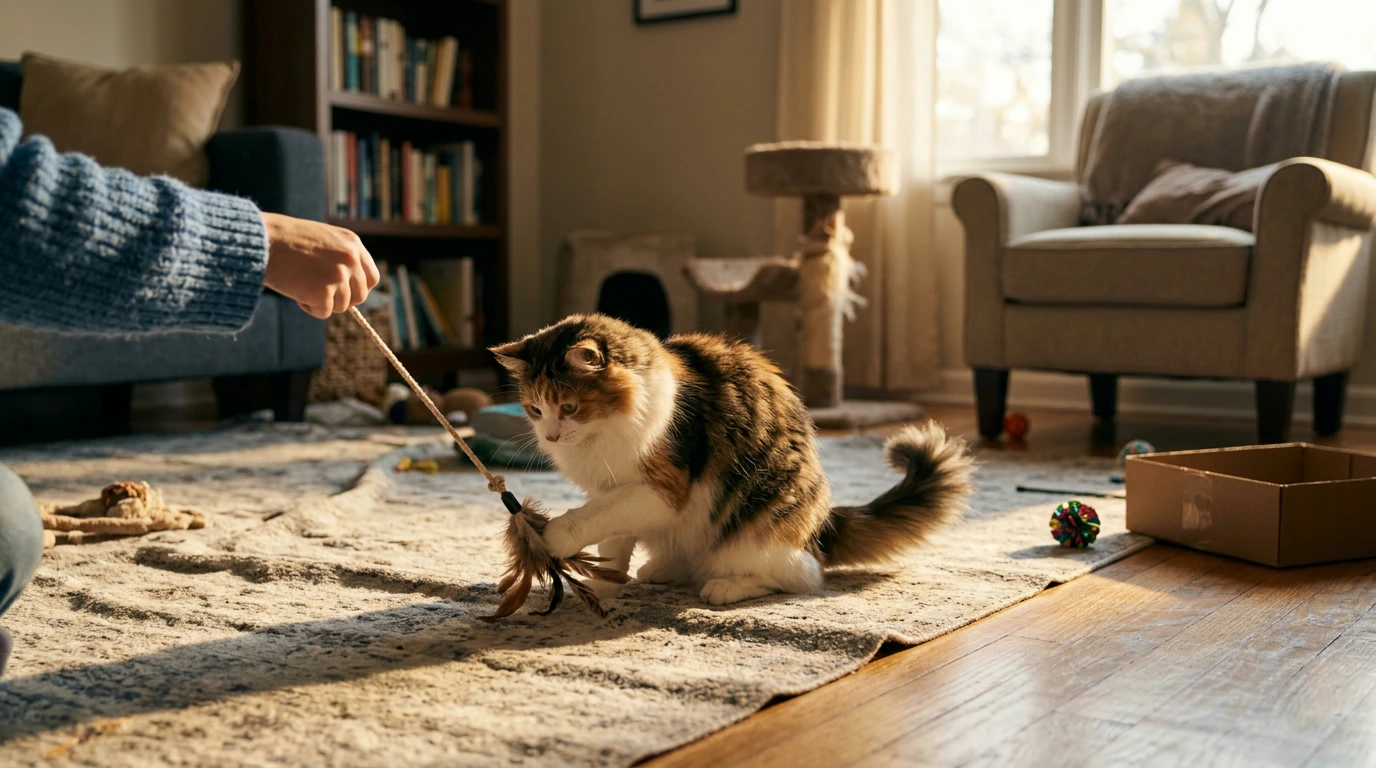
How can I tell the difference between playful behavior and overstimulation in cats?
Playful behavior in cats usually looks loose, bouncy, and “self-handicapped”—your cat may pause, switch directions, or let you “win” for a moment. Overstimulation is more like a sudden shift: body language tightens, tolerance drops, and your cat’s reactions get sharper or harder to interrupt.
Signs your cat is playing
Play tends to come in bursts with breaks. Look for a relaxed face, normal ears (not pinned back), a tail that moves in smooth swishes, and a body that stays springy rather than rigid. During play, a cat often redirects easily to a toy, responds to a familiar cue, and stops to reset—sniffing, grooming briefly, or flopping down before restarting.
Signs your cat is overstimulated
Overstimulation often shows up as escalating intensity and reduced control. Common clues include skin twitching along the back, tail lashing or thumping, ears flattening, pupils widening, growling or sharp meows, and a stiff posture. A key difference is the “snap” moment: petting or play that was fine seconds ago suddenly triggers biting, grabbing, or bunny-kicking, and your cat may not disengage even when you stop moving.
Quick ways to confirm what’s happening
Try a pause test: stop petting or freeze the toy. A playful cat may wait, chirp, or re-engage gently. An overstimulated cat often stays tense, may swat at your hand, or seems unable to settle. Also check recovery time—playful cats calm down quickly; overstimulated cats may need a quiet space for several minutes.
What to do next
If you notice overstimulation, end interaction calmly, avoid hands-on play, and offer a wand toy or toss toy at a distance later. Keep sessions short, especially with sensitive cats, and watch for early warning signs so you can stop before the “snap.” For a deeper breakdown of body cues and safer play routines, visit the full guide here.
FAQ
Why does my cat bite during petting sometimes?
This is often petting-induced overstimulation: the sensation builds until your cat’s threshold is reached, leading to a quick bite as a “stop” signal. Watch for twitching skin, tail lashing, or ears turning back, and end petting before it escalates.












Leave a comment