Stress Signs in Dogs & Cats at Home: What to Watch
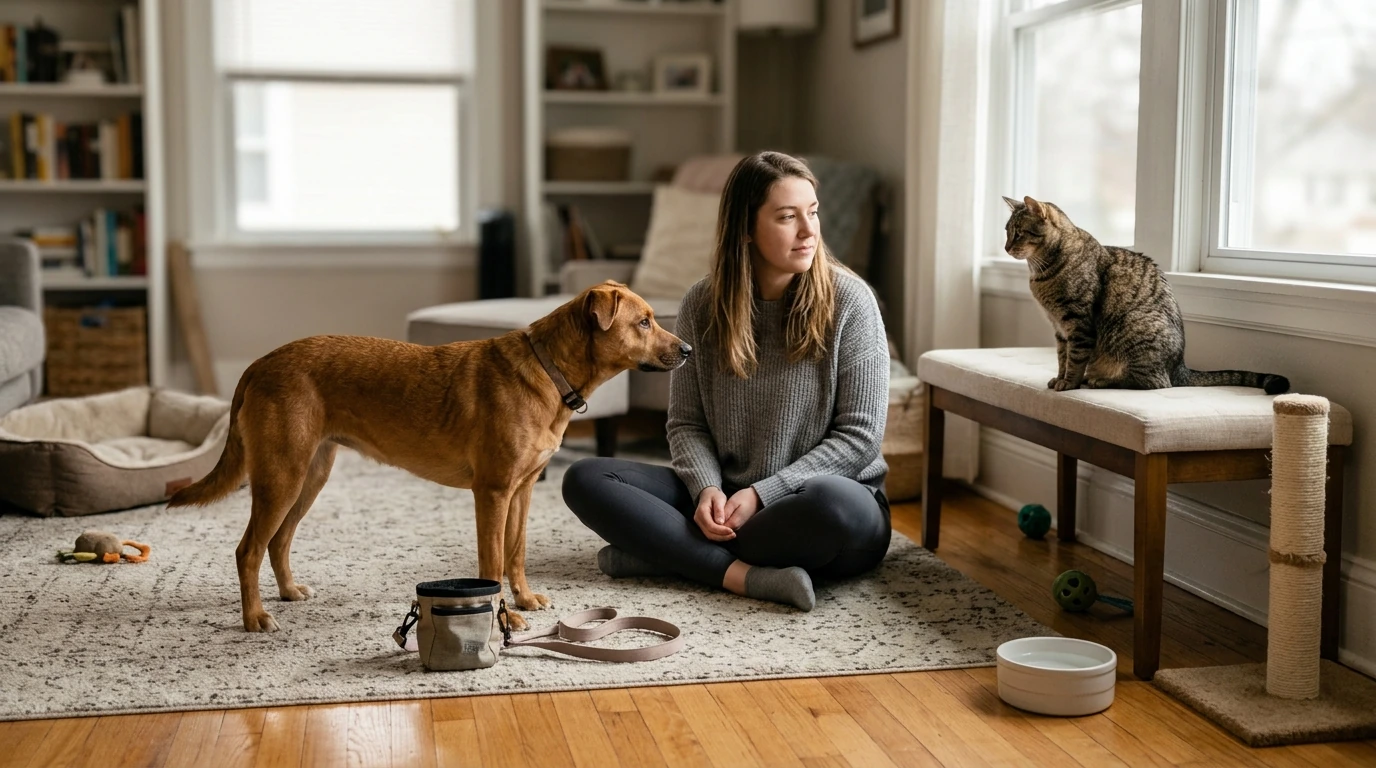
What are the most common signs of stress in dogs and cats at home?
Stress at home can look subtle at first, especially when pets “seem fine” but start acting a little off. The most common signs tend to show up in behavior, body language, and daily routines like eating, sleeping, and bathroom habits.
Common stress signs in dogs
Many dogs show stress through changes in how they interact with people and their environment. Watch for pacing, restlessness, trembling, tucked tail, pinned-back ears, excessive panting (when it’s not hot or after exercise), or yawning and lip-licking in tense moments. Some dogs become clingy and shadow you room-to-room, while others hide or avoid contact.
Stress can also trigger barking, whining, destructive chewing, scratching at doors, or sudden reactivity on leash. Appetite changes, vomiting/diarrhea, and increased shedding can happen too. House-trained dogs may have accidents if they’re overwhelmed or anxious.
Common stress signs in cats
Cats often display stress through avoidance and routine changes. Hiding more than usual, freezing, crouching low, dilated pupils, flattened ears, a twitching tail, or sudden swatting can all be red flags. Some cats overgroom (leading to thinning hair or bald patches), while others stop grooming and look unkempt.
Listen for vocal shifts: increased yowling, growling, or unusual meowing. Litter box issues are common—urinating outside the box, straining, or going more frequently can signal stress (and can also indicate a medical problem that needs prompt attention).
When stress might be more serious
If stress signs are intense, last more than a few days, or include vomiting, diarrhea, self-injury, breathing trouble, or litter box straining, contact a veterinarian. Medical issues can mimic stress, and early support can prevent problems from escalating.
For a deeper look at pet temperament, behavior shifts, and practical ways to reduce stress, visit this guide on dog and cat temperament, behavior, and stress.
FAQ
How can I help my pet calm down after a stressful event?
Give them a quiet, predictable space, keep interactions gentle, and stick to normal routines for meals and potty/litter time. Reward calm behavior and avoid forcing contact; if signs persist or worsen, check in with your vet or a qualified trainer/behaviorist.










Leave a comment